
 |
 |
We are in a hotel for two days before we leave first for Pittsburgh (tomorrow) to visit Rajan's brother and family, and then for Portugal (Saturday, arriving Sunday.) We are excited to return, and yet we treasure the time we've had here meeting up with friends and family, visitng favorite places like Pacific Grove above, and of course, I was happy to meet with writers and poets and have a bookstore signing. We even squeezed in three visits to Crocker Art Museum. But we are ready to go home.
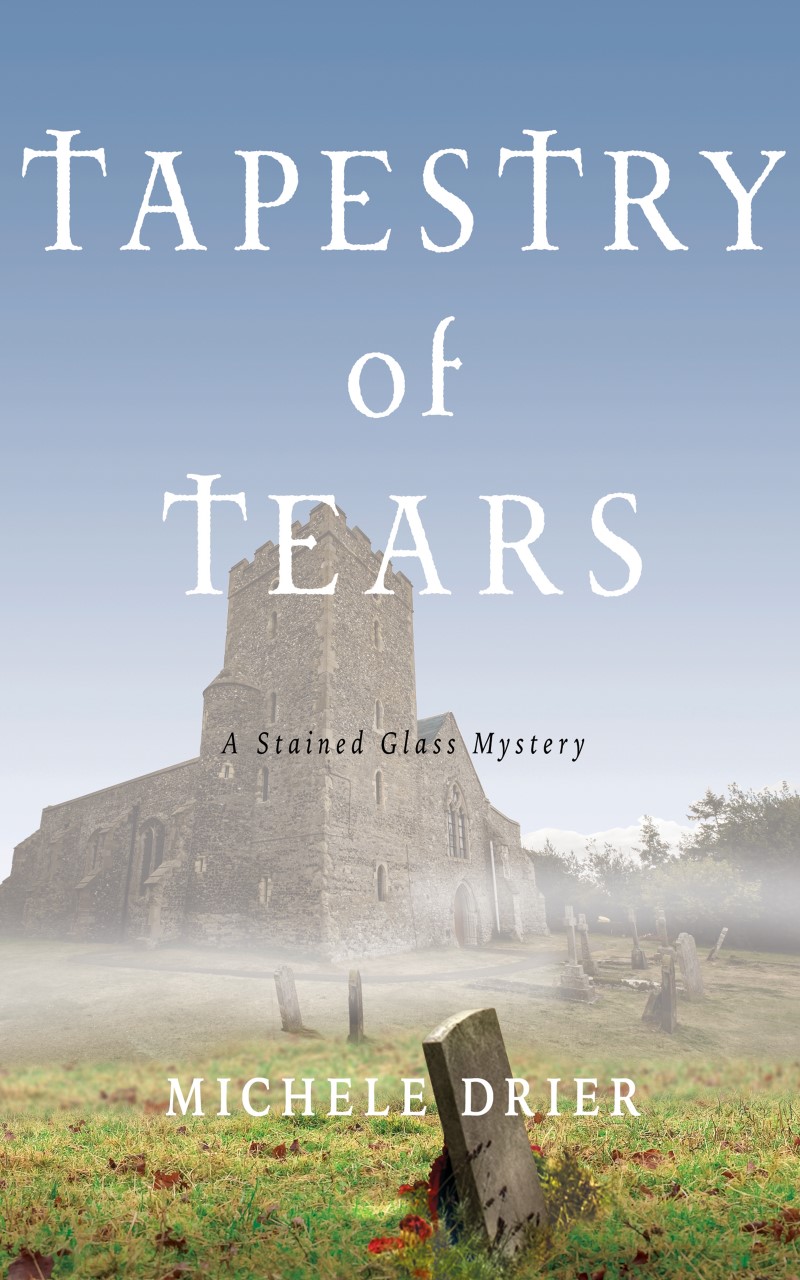
While we were packing up and cleaning out things, getting ready to go, I did get a chance to read and re-read a terrific mystery by Michele Drier, Tapesty of Tears. It's the second book in her Stained-Glass series, and I wrote a review of it, which I'm posting here, as well as some interview questions she was kind enough to answer.
The Review:
Tapestry of Tears is Book Two of Michel Drier’s new Stained-Glass Mystery series, featuring Rosalind (Roz) Duke., an internationally known stained-glass artist.
Rosalind, a widow, moved from LA to a quiet beach town on the Oregon coast, hoping to resolve her grief and the unanswered questions about her husband’s death. But death seems to stalk her. In Book One (Stain on the Soul) Roz becomes a reluctant sleuth when a neighbor is killed with one of her tools. In Tapestry of Tears, Roz travels to England and France to study how she might translate portions of the embroidered Bayeux Tapestry to stained glass form, capturing colors used in medieval glass. While visiting a small church in England, she encounters a dead body and soon finds herself the target of the killers.
This book has so many layers for a reader to enjoy. 1. The mystery itself: Who was the dead body and why was he killed? 2. Believable, three-dimensional characters: Roz is sympathetic and likeable, as are Hal Fitzroy (the local Detective Inspector) and Liam (Roz’s friend in Portland who is currently dog sitting.) And the villains in this piece are truly villainous. 3. Richly textured settings in coastal England and in France, as well as a dip into the history of the Norman Invasion. 4. Good plotting that keeps the pages turning. There is more than stained-glass involved, and soon Roz is cooperating with DI FitzRoy who, in turn is working with Interpol to track down a human trafficking ring. 5. A peek into how countries work together to solve international crime. And 6. Fascinating explanations (that are so well woven into the unfolding story, they never distract) of how stained-glass windows and art pieces are crafted.
This is the kind of book that is pleasurable to read more than once (as I have), and I highly recommend it.
The Interview
1. Your protagonist, Rosalind Duke, is an internationally famous stained glass artist, a unique choice for a sleuth. How did you decide on her profession?
I wanted her to have a unique career and reflect my own selfish interests! I’ve always had a career, even as a single mom, so her passion underlays all her other relationships.
2. Did you know much about stained glass before you started writing this series? Or is your information mainly based on research?
A mishmash. I’ve always been stunned at the beauty of medieval stained glass but am having to research the manufacturing methods. I’m trying to track down exactly what made the light through medieval stained glass so nuanced during the day
3. If the latter, have you been tempted to do any stained glass work yourself?
Yes, years ago. In the 60s I was chipping away at GE requirements and took an Art History class. We could write a paper or do a project and, even though I was a reporter for the San Jose Mercury News and wrote every day, I decided on a project, a Celtic Cross in stained glass. Not very refined, nothing like Roz’ work, but I learned the rudiments and enjoyed it.
4. How did you happen to choose the Bayeux Tapestry for Rosalind’s project?
So much of Roz’ career choice is centered around religious motifs, I wanted her to have meaningful beyond-commercial designs and work. I’m a history buff, and her work is in a decidedly medieval discipline that centered on religion, so this was a challenge.
5. The historic aspects of the tapestry and the events leading up to the Norman invasion added so much to the story. Are you a history buff? If so, have you been particularly interested in this part of history?
Yes, I’m a history buff, primarily medieval European and I’m gaga for Gothic architecture, art, glass. It probably comes from having spent a lot of growing-up time with my grandmother in her apartment on Nob Hill, watching the final touches (and glass) being put on Grace Cathedral in San Francisco.
6. Rosalind’s plight as a widow with unanswered questions about her husband’s death makes her a particularly sympathetic character. Did she just come to you as a character (some do, I know), or did you have to do a lot of work puzzling her out?
I knew I wanted her to be an off-beat cozy protag, but her backstory of her husband, Winston, being murdered in LA gave her an edge. She needed motivation to uproot her comfortable life in LA and take on a life alone, so as I began to think of her, her vulnerabilities and her coping strategies, she came to me as a whole. At the end of the first book, Stain on the Soul, Winston’s murderer is caught, but Roz still has questions about why he was at the place of the drive-by shooting.
7. Reading the book, the settings seem so visual and immediate, the flow effortless. Have you traveled a lot to England and France? LA and Portland?
Yes and no. I’ve been to England and France, not nearly as much as I want! I’ve spent time on the coast of Kent and seen the Tapestry so all the settings are real, places I’ve been. Even the Dymchurch Railway and the castle and church at Lympne. I lived in Southern California for several years, although not right in LA, and have relatives in the Portland area.
8. What is your writing routine? Do you write regularly? Now and then? Special time of day?
It’s been sporadic this year due to health issues, but usually I try to write at least 4-5 days a week. On good days, when I’ve cleared my calendar and am in the groove, I can write about 3,000 words a day, but I’ve eased off a bit and now shoot for 5,000 words a week. Because I’m a news junkie and always have some contemporary events in my books, I spend a couple of hours each morning reading online news sources (NY Times, Washington Post, CNN, Reuters, Axios, Politico, CalMatters). I try to recap the WIP to date before lunch then put in writing time from about 2 to 5 p.m.
9. How do ideas come to you? What is your writing process?
I read pretty widely and voraciously so I clip, save, make notes on weird or interesting things I run across. The basic plot for Tapestry grew from a small story about some 30,000 pieces of medieval stained glass found in the attics of Westminster Cathedral during renovation work. That factoid lived on a sticky note for a couple of years before I had a chance to use it.
10. Plotter or pantster or somewhere in between?
Pantser. I’m the one who, in school, wrote the paper THEN outlined it. I guess my mind goes for the whole then I fill in the pieces.
11. Are there many more adventures planned for Rosalind Duke? Or do you just think in terms of the next one, and then the next one.
The third Roz Duke story, Resurrection of the Roses, is in the writing stages now. I have about 15,000 words. Resurrection takes Roz and Liam (with Tut!) to France where she’s been invited to give a presentation on medieval stained glass at the Sorbonne. She’ll spend time in French cathedrals and Liam will research and write about French wines. After that? We’ll see what she has up her sleeve.
12. Any advice for budding writers?
Read, read, read. And write, write, write. This is storytelling and it doesn’t matter if your work is character-based or plot-based, the story is the most important factor. And don’t get too wound up in the dos and don’ts of writing, this is communication and you’re writing stories for others to enjoy, learn from, savor.
Most important: READ, READ, READ.
Michele Drier is a fifth-generation Californian and spent better than 20 years as a reporter and editor at California daily newspapers. She writes traditional mystery series (The Amy Hobbes Newspaper Mysteries and The Stained-Glass Mysteries) and paranormal romance (an 11-book series, The Kandesky Vampire Chronicles) as well as a stand-alone medical thriller, Ashes of Memories. She is the past president of Sisters in Crime chapters, Capitol Crimes and the Guppies, was the co-chair for Bouchercon 2020, the world’s largest and oldest mystery fan convention and is currently the president of the NorCal chapter of Sisters in Crime.
The Book:
 |
Visit her webpage, www.MicheleDrier.me
Or her Facebook page, http://www.facebook.com/AuthorMicheleDrier
Or find her on her author page at http://www.amazon.com/Michele-Drier/e/B005D2YC8G/
Buy link: https://www.amazon.com/dp/B08P41FKJY\
How about you? Are you interested in stained glass? Have you ever had class that later gave you the inspiration for a book? Have you ever seen the Tapestry? (I sure would like to.) Do you like mysteries that take you to faraway places?


